Gemini_Generated_Image_qpefjnqpefjnqpef

3-2-1 and Then Some: How I Back Up My Entire Home Lab

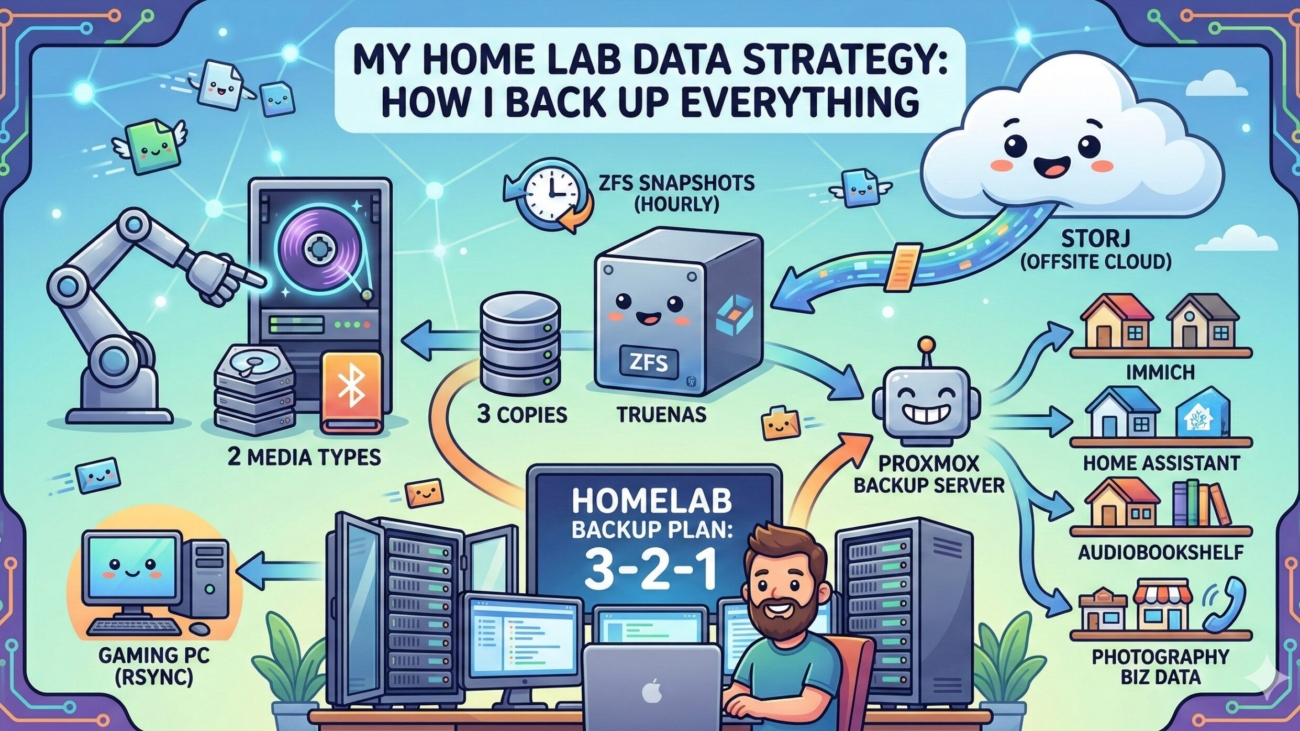
A comprehensive breakdown of my homelab backup architecture, built around the “3-2-1” principle. The strategy utilizes TrueNAS as the central hub, employing ZFS snapshots for immediate disaster recovery, Rsync to a secondary PC for local hardware redundancy, and Proxmox Backup Server for managing VM/LXC backups. Finally, all critical datasets and backups are automatically synced offsite to Storj, ensuring the entire network is well protected against failure
unnamed

Your Backups Need a Backup: Syncing PBS to Storj for Offsite Peace of Mind

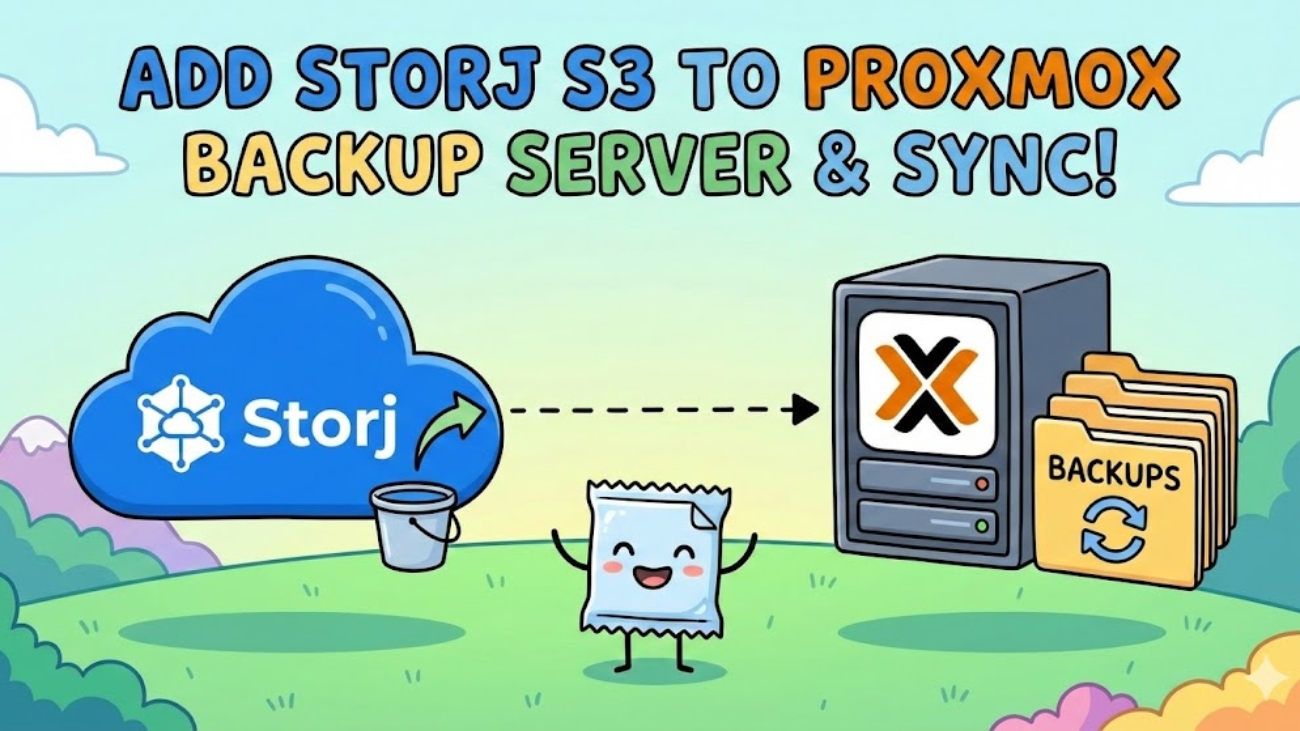
A guide to implementing offsite homelab backups by syncing a local Proxmox Backup Server (PBS) directly to Storj’s decentralized S3-compatible cloud storage. Taking advantage of PBS’s native S3 support and Storj’s free egress, the author explains how to configure S3 endpoints with path-style access, create a remote datastore, and set up a pull-based sync job to automatically upload deduplicated and doubly-encrypted backups every night.

unnamed

Switching from Windows 11 to CachyOS Linux

After growing tired of Microsoft’s aggressive pop-ups and forced features, the author shares their experience migrating their primary AMD gaming rig (Ryzen 7 7700X, Radeon 7900 GRE) from Windows 11 to CachyOS, an Arch-based Linux distribution known for speed and performance. The post details the smooth gaming experience (easily hitting 165 FPS in EVE Online out of the box), adapting to KDE Plasma and package managers like Flatpak, and a clever workaround using a Proxmox-hosted Windows 10 VM via Remmina for their daily work needs. Ultimately, the author highly recommends the switch for enthusiasts looking to take back control of their hardware.